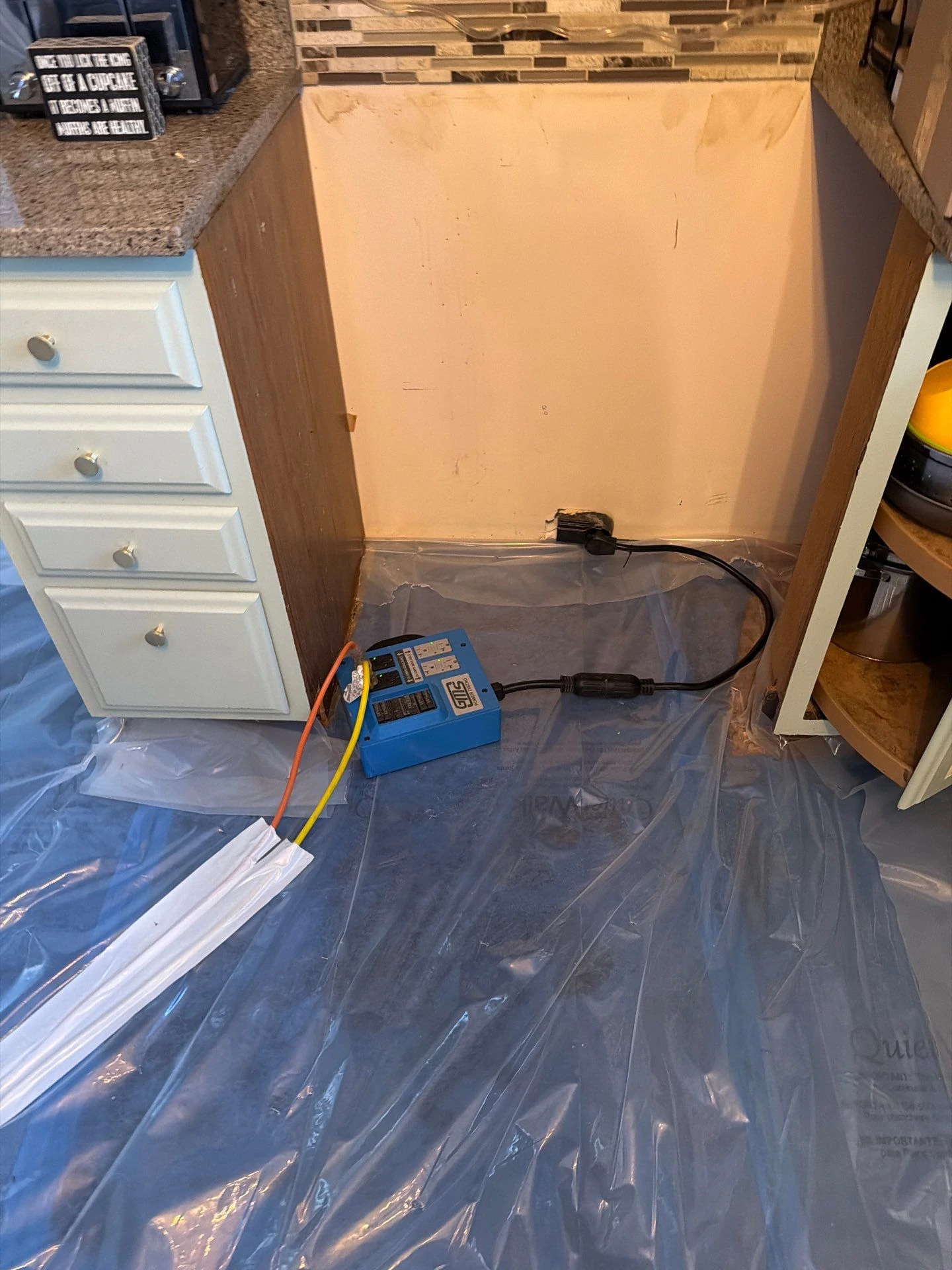
1. Warning Signs Worth Investigating
Hidden leaks leave a trail. Watch for these before they escalate.
- Musty odor concentrated near one wall or baseboard
- Paint blistering, bubbling, or peeling in a small area
- Drywall that feels cool or soft to the touch
- Water bill increase with no change in usage
- Faint hissing or trickling sound when fixtures are off
- Warm spots on a floor (hot water line) or cold spots on a wall
- Mold dots appearing along grout lines or corners
- Warped baseboard, swollen trim, or lifting wallpaper
Two or more of these in the same area means it is time for an inspection, not a paint touch up.
Timing the symptoms matters too. A stain that grows after every dishwasher cycle points to a drain line. A stain that grows steadily, even with no fixtures running, points to a pressurized supply line. Document the pattern for a week if you can.
2. The Non-Invasive Detection Toolkit
Modern leak detection relies on layered tools. No single device finds everything, which is why we run them in sequence.
- Thermal imaging cameras: reveal temperature differences caused by evaporating moisture or hot water line leaks
- Pinless moisture meters: scan drywall up to 3/4 inch deep without puncturing the surface
- Pin type meters: confirm exact moisture percentage at suspect points
- Acoustic listening devices: amplify the sound of pressurized water escaping a pipe
- Borescope cameras: snake through a 1/4 inch hole to visually inspect wall cavities
- Tracer gas equipment: introduces inert gas into the line to surface through the smallest cracks
- Pressure testing kits: isolate a section of plumbing to confirm whether it holds
- Hygrometers: compare ambient humidity inside the cavity versus the room
- Dye tablets: trace slow toilet or shower pan leaks to their entry point
Pairing these is how we narrow a vague stain to a specific stud bay. Our moisture mapping with thermal imaging guide walks through how the readings come together into a clear picture.
Tool limits are worth knowing. Thermal cameras show temperature, not water, so a sunlit wall can mimic a leak. Pinless meters can read false positives over metal studs or foil backed insulation. That is why a trained operator matters more than the price tag of the gear.
3. The Assessment Workflow
Here is the order a Centerville Water Restoration crew follows on a typical Centerville call:
- Walk the home with you to hear the history and symptoms
- Visual inspection of fixtures, supply lines, and visible plumbing
- Thermal scan of suspected walls, ceilings, and floors
- Pinless moisture readings across the suspect area to map the wet zone
- Pin readings at the edges to define dry to wet boundaries
- Acoustic listening at quiet hours if a pressurized line is suspected
- Borescope inspection through a small drilled hole, only if needed
- Written report with photos, readings, and a recommended scope
Most assessments take within 2 hours. The free walkthrough is exactly that: free, no obligation, no upsell theater. When you call, our dispatcher confirms address, symptoms, and access notes, then sends a tech (in most cases within 2 hours) for active leaks.
9. After the Leak Is Found
Detection is step one. Drying, repair, and verification follow.
- Plumber repairs the pipe or fitting at the smallest opening possible
- Affected cavity is dried with targeted air movers and a dehumidifier
- Daily moisture readings confirm progress toward dry standard
- Antimicrobial applied if materials sat wet for more than 48 hours
- Final reading documented in writing before any drywall closes up
- Patch, prime, and paint scheduled once the cavity reads dry
Closing a wall too early traps moisture and grows mold inside the cavity. The verification step is the difference between a repair that lasts and one that resurfaces in six months as a darker stain.
5. Detection Cost vs. Demolition Cost
Non invasive detection saves money up front and on the back end. Here is how typical Centerville investments compare.
- Non invasive scan: $0 to $350, often free with a documented repair
- Acoustic plus tracer gas: $300 to $700 for stubborn pressurized leaks
- Targeted access cut: $200 to $1,000 for a single inspection port and patch
- Exploratory demolition: $1,500 to $4,000 once multiple walls or ceilings open up
Ranges reflect typical Central Indiana single family homes. Complex multi story routes can run higher. Insurance carriers also tend to reimburse documented detection faster than open ended demolition invoices, because the scope is defined before the saw moves.
8. Red Flags in Other Contractors' Quotes
- Demolition recommended before any moisture readings are taken
- No written scope, only verbal estimates
- Refusal to show you thermal images or meter readings
- Pressure to sign on the spot
- No mention of IICRC standards or certifications
- Vague timelines without drying benchmarks
- Flat fees with no line items for equipment or labor
- No discussion of containment, antimicrobial use, or post dry verification
If a quote starts with a saw instead of a sensor, get a second opinion. Our take on signs of hidden water damage can help you stress test what you are being told.
6. When Cutting Is Unavoidable
Sometimes the wall has to open. We minimize the footprint.
- Single 4-inch by 4-inch inspection port, not a full sheet removal
- Cut along stud lines so patches are clean
- Access from closets, garages, or unfinished sides whenever possible
- Document with photos before, during, and after
- Coordinate with the plumber so one opening serves both diagnosis and repair
- Contain dust with plastic and a HEPA air scrubber on site
- Salvage trim and baseboard so reinstall looks original
For deeper context on how much material has to go, our drywall after water damage breakdown explains the IICRC thresholds we follow.
7. What to Do Before We Arrive
- Shut off the main water supply if you hear active running
- Photograph stains, warps, and any visible drips
- Move valuables and electronics away from suspect walls
- Locate your water meter and check for movement with all fixtures off
- Note when symptoms appear (after showers, overnight, during rain)
- Pull recent water bills for comparison
- Clear a path to mechanical rooms, laundry closets, and under sink cabinets
- Keep pets in a separate room so techs can move freely with equipment
If you can, list every plumbing event from the last six months. A toilet that ran for a weekend, a dishwasher hose swap, a fridge that was pulled out for cleaning. Small details turn into fast answers.
4. Common Hidden Leak Sources We Find
- Pinhole corrosion on copper supply lines, often 10 to 20 years old
- Failed solder joints behind tubs and showers
- Cracked PVC drain lines under second floor bathrooms
- Loose toilet flange seals dripping into the subfloor
- Shower pan leaks at the curb or drain assembly
- Condensation drips from poorly insulated cold lines
- Ice maker supply line punctures in finished basements
- Hose bib leaks tracking inside the exterior wall
- Washing machine box valve seepage behind laundry walls
- Tub overflow gaskets that fail only at full water level
The pattern matters. A copper pinhole on a pressurized line behaves very differently from an intermittent drain leak that only shows when the upstairs shower runs. Age of the home is a strong clue too. Centerville houses built between 1985 and 2005 often have early polybutylene or thin wall copper that fails at predictable spots.